

In international trade and maritime contracts, disputes are inevitable. Whether it’s a charter-party conflict, a cargo claim, or a marine insurance dispute, resolving these matters quickly and efficiently is crucial to keeping global commerce moving.
Arbitration has become the preferred mechanism for resolving such disputes due to its neutrality, confidentiality, cost-effectiveness, and enforceability under international treaties
The choice of arbitration venue often depends on jurisdictional preference, governing law, and enforceability under international arbitration conventions.
This article aims to provide an overview of Arbitration Centres specializing in maritime and trade-related disputes, their jurisdictional advantages, and their role in shaping the global arbitration landscape.
1. Choosing the Right Arbitration Framework
Selecting an arbitration mechanism depends on several key factors, including the nature of the contract, the governing law, and the enforcement mechanisms available under international treaties.
Arbitration provides a private and efficient mechanism to resolve disputes, avoiding lengthy litigation in national courts.
The right arbitration framework ensures efficiency, neutrality, and enforceability in resolving disputes.
Arbitration spans multiple industries, each with specialized institutions, procedural rules, and expert arbitrators. In our field, the most relevant branches include:
- Trade Arbitration – Sales contracts, distribution agreements, and commodity trade disputes.
- Maritime Arbitration – Shipping disputes, charterparties, and marine insurance claims.
- Commercial Arbitration – Corporate disputes, joint ventures, and supply chain conflicts.
- Aviation Arbitration – Airline liability, aircraft leasing, and aviation insurance claims.
- Energy Arbitration – Covering oil & gas contracts, renewables, and power generation disputes.
- Environmental Arbitration – Cross-border environmental liability and regulatory compliance disputes.
Each branch has specialized institutions, procedural rules, and expert arbitrators familiar with industry-specific legal frameworks.
2. Key Arbitration Centres
There are specialist Arbitration Centres set up for the specific purpose of Maritime Arbitration. The two prominent ones are the London Maritime Arbitration Association (LMAA) and the Singapore Chamber of Maritime Arbitration (SCMA). Both centres handle a substantial caseload of maritime arbitration cases.
2.1. London Maritime Arbitrators Association (LMAA) – United Kingdom
When it comes to maritime arbitration, London is the undisputed global hub, and the London Maritime Arbitrators Association (LMAA) is at the heart of it. Handling thousands of cases each year, LMAA is the go-to institution for resolving disputes in charterparties, ship sales, cargo claims, and marine insurance conflicts.
What makes LMAA stand out? One major factor is that most international shipping contracts are governed by English law, a legal framework that has shaped maritime commerce for centuries.
Interesting fact: In some years, LMAA has handled more maritime arbitration cases than all other major arbitration centres combined.
🔗 Related article: Arbitration Jurisdictions: Singapore and London in Charterparties
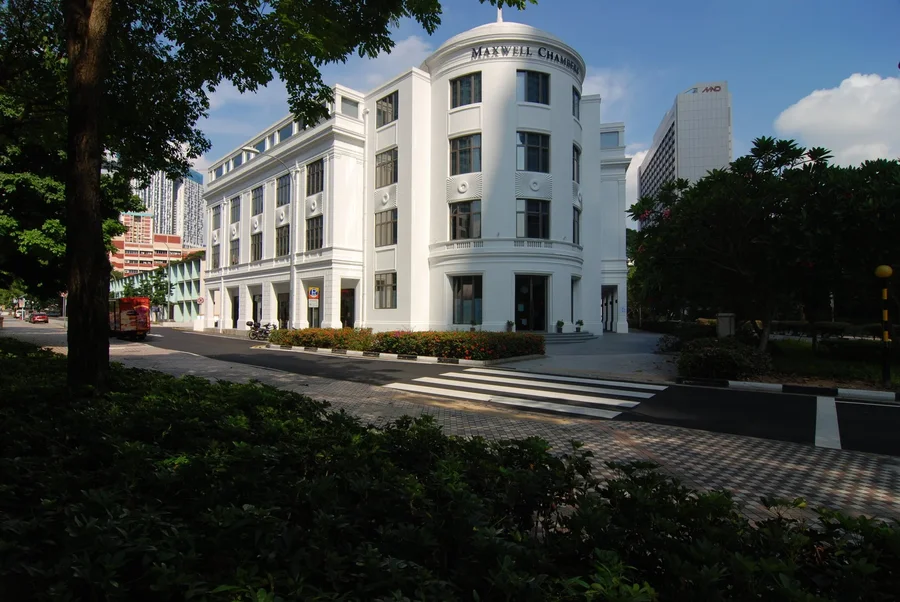
2.2. Singapore Chamber of Maritime Arbitration (SCMA) – Singapore
Why choose SCMA?
- A fast-growing arbitration hub for maritime disputes in Asia.
- Provides a neutral and flexible framework tailored to the shipping industry.
- Supported by Singapore’s strong legal system and proximity to major global shipping routes.
While London (LMAA) remains the dominant force in maritime arbitration, Singapore (SCMA) has rapidly emerged as a serious competitor, especially for disputes involving Asia-Pacific trade.
Unlike LMAA, which follows a more traditional structure, SCMA offers a more flexible, ad hoc arbitration model, allowing parties to tailor proceedings to their specific needs.
This makes SCMA particularly attractive for businesses looking for cost-effective and efficient dispute resolution outside the rigid frameworks of institutional arbitration.
🔗 Related article: Arbitration Jurisdictions: Singapore and London in Charterparties
2.3. Hong Kong Maritime Arbitration Group (HKMAG) – Hong Kong
The Hong Kong Maritime Arbitration Group (HKMAG) operates under the framework of the Hong Kong International Arbitration Centre (HKIAC), positioning itself as a key institution for resolving maritime and commodity trade disputes in the Asia-Pacific region.
Unlike LMAA, which dominates in English law-governed shipping disputes, HKMAG offers an attractive alternative for businesses with strong trade links to China. Its procedures align with English legal principles while also benefiting from Hong Kong’s arbitration-friendly legal system, making it a preferred choice for companies involved in cross-border trade with mainland China.
4. Society of Maritime Arbitrators (SMA) – United States
In the United States, the Society of Maritime Arbitrators (SMA) in New York serves as a major arbitration forum, particularly for charter-party disputes, marine insurance claims, and maritime trade conflicts.
As one of the longest-established arbitration institutions in the industry, SMA provides a set of widely recognised arbitration rules frequently included in contracts by shipowners, charterers, and insurers. While SMA does not have the same volume of cases as LMAA, its strong ties to the New York maritime sector make it a crucial centre for those dealing with disputes involving the Americas.
5. China Maritime Arbitration Commission (CMAC) – China
For businesses operating in China-related maritime trade, the China Maritime Arbitration Commission (CMAC) offers a distinct advantage.
Functioning under the China International Economic and Trade Arbitration Commission (CIETAC), CMAC handles disputes arising from shipping, trade, and logistics, providing a direct and efficient mechanism for resolving conflicts involving Chinese companies.
Unlike Hong Kong’s HKMAG, which follows a common law approach, CMAC operates within China’s broader legal framework, making it the go-to choice for those seeking arbitration under Chinese jurisdiction.
6. Chambre Arbitrale Maritime de Paris (CAMP) – France
In Europe, the Chambre Arbitrale Maritime de Paris (CAMP) stands as France’s leading maritime arbitration institution.
Specialising in transport, commodities trade, and shipping contract disputes, CAMP is particularly well-regarded within Francophone jurisdictions.
While it may not have the same global reach as LMAA or ICC, it provides a strong regional alternative for companies operating in French-speaking markets, offering expertise in civil law-based dispute resolution.
7. International Chamber of Commerce (ICC) – France (Paris)
The International Chamber of Commerce (ICC), headquartered in Paris, remains one of the most prestigious arbitration institutions worldwide.
Unlike sector-specific maritime arbitration bodies such as LMAA or SCMA, ICC arbitration is widely used across various industries, including commodity trading and shipping.
ICC arbitration clauses are a standard feature in international contracts, offering structured procedures, a neutral venue, and strong enforcement mechanisms under the New York Convention, making it a preferred choice for companies seeking a globally recognised dispute resolution framework.
8. Dubai International Arbitration Centre (DIAC) – UAE
For parties engaged in trade and maritime business in the Middle East, the Dubai International Arbitration Centre (DIAC) serves as a key arbitration hub.
DIAC provides a structured arbitration system tailored to shipping, logistics, and international trade, offering an efficient alternative to London or Singapore for disputes arising in the Gulf region.
Unlike some Western arbitration bodies, DIAC is uniquely positioned to accommodate disputes involving regional legal and commercial practices, making it an increasingly attractive choice for businesses operating in the UAE and beyond.
9. Stockholm Chamber of Commerce (SCC) – Sweden
Finally, the Stockholm Chamber of Commerce (SCC) has built a reputation as a leading arbitration centre for European and Russian trade disputes.
While it may not be as maritime-focused as LMAA or SCMA, SCC is frequently chosen for commodity trading and international commercial agreements.
With its neutral and reliable arbitration procedures, SCC is a particularly strong option for companies seeking an independent venue for resolving cross-border trade disputes.


