Common Arbitration Clauses in International Contracts

Close-up of a conference table with legal documents and a pen, symbolising arbitration negotiations. In the background, two business professionals are engaged in a discussion

In every contract, particularly in international trade and maritime agreements, arbitration clauses enhance the enforceability of dispute resolution. 

Enforceability is what makes an arbitration contractual clause carried out, effective.

For instance, when an agreement between two parties, such as a carrier and a trader, includes an arbitration clause that clearly specifies the seat of arbitration, let’s say, London, that means that the arbitration proceedings will be governed by English arbitration law, specifically the Arbitration Act 1996.

In the event of a dispute, the exporter cannot argue that the conflict should be resolved in another jurisdiction, as the agreed seat of arbitration determines the procedural framework, judicial oversight, and enforceability of the arbitral award.

Choosing the right arbitration jurisdiction helps determine the procedural framework, judicial oversight, and the enforceability of arbitral awards.

If we were to define the term precisely, we could say:
“Arbitration clauses establish a structured and predictable framework for dispute resolution, allowing parties to circumvent prolonged litigation in foreign jurisdictions while ensuring enforceable and efficient settlements.”

Why do arbitration clauses matter?

A properly structured arbitration clause ensures:

  • Predictability in dispute resolution, defining clear jurisdictional rules.
  • Legal certainty, reducing exposure to conflicting national laws.
  • Efficient enforcement, aligning with the New York Convention and other arbitration frameworks.

This article explores key arbitration clauses in maritime, insurance, and trade contracts, highlighting best practices and enforcement considerations.

1. LMAA Arbitration Clause (Shipping & Maritime)


“Any dispute arising out of or in connection with this contract shall be referred to arbitration in London in accordance with the London Maritime Arbitrators Association (LMAA) Terms. The arbitration shall be conducted by a tribunal of three arbitrators unless otherwise agreed by the parties.”

The things we’d like to point out are:

  • The LMAA is specifically tailored for disputes involving charter parties, bills of lading, shipbuilding contracts, collisions, and marine insurance.
  • Arbitrators are maritime specialists, offering expert rulings grounded in industry standards.
  • It ensures disputes are resolved under English arbitration law and the Arbitration Act 1996.
  • English courts have a pro-arbitration stance, providing strong support for arbitration agreements and limited judicial interference.
  • Awards are enforceable under the New York Convention, facilitating recognition in over 160 jurisdictions.
  • Arbitration under the LMAA is private and confidential, protecting sensitive commercial information.

Best practices for LMAA Arbitration Clauses:

  • London as the arbitration seat to ensure enforcement efficiency.
  • Clearly define whether the dispute will be handled under the Small Claims Procedure (claims up to $100,000) or the Intermediate Claims Procedure ($100,000–$400,000).
  • Consider including explicit confidentiality provisions, as these are not automatic under LMAA rules.

2. Standard ICC Arbitration Clause


“All disputes arising out of or in connection with the present contract shall be finally settled under the Rules of Arbitration of the International Chamber of Commerce by one or more arbitrators appointed in accordance with the said Rules. “

What characterises this clause? What does its inclusion imply?

  • The clause binds the parties to the ICC Rules of Arbitration, which are comprehensive and well-established.
  • The ICC Rules of Arbitration provide a comprehensive framework for all stages of the arbitration process, from the initial filing of a request for arbitration to the final award.
  • Awards issued under the ICC Rules are generally enforceable in most countries, thanks to the New York Convention on the Recognition and Enforcement of Foreign Arbitral Awards.
  • By agreeing to arbitration, the parties are giving up their right to have a court hear the dispute, at least in the first instance.

Best practices for ICC Arbitration Clauses

  • Specify the number of arbitrators: Default ICC rules assume a sole arbitrator, but high-stakes disputes may require a tribunal of three.
  • Define the governing law clearly to avoid procedural uncertainty.
  • Include an expedited procedure option for disputes under $2 million, reducing time and cost.

3. SIAC Arbitration Clause (Asia-Pacific Disputes)


“Disputes shall be referred to arbitration in Singapore under the rules of the Singapore International Arbitration Centre (SIAC). The tribunal shall consist of three arbitrators, and the language of arbitration shall be English.”

When is it recommended to use this clause?

  • Well-structured and internationally recognised framework where parties benefit from SIAC Rules, ensuring a modern arbitration process with clear procedural guidelines, widely accepted for efficient dispute resolution.
  • Strong enforceability in Asia-Pacific where SIAC awards are recognised across key jurisdictions, making it an ideal choice for businesses operating in Singapore, China, India, Indonesia, and other regional markets.
  • Neutral and arbitration-friendly jurisdiction where Singapore provides a stable legal environment, with courts that uphold arbitral awards, minimise judicial interference, and support arbitration as a preferred dispute resolution method.
  • Efficient and cost-effective dispute resolution where SIAC offers streamlined procedures, including expedited arbitration options, reducing time and costs while ensuring a fair and enforceable outcome.

Best practices for SIAC Arbitration Clauses

  • Choose Singapore as the arbitration seat for strong enforceability in Asia.
  • Specify whether expedited procedures apply for smaller disputes.
  • Clearly define the language of arbitration to prevent misinterpretation.

4. UNCITRAL Ad Hoc Arbitration Clause

“Disputes shall be resolved by ad hoc arbitration under the UNCITRAL Arbitration Rules, with the seat of arbitration in Geneva. The tribunal shall consist of three arbitrators, and the language of arbitration shall be French.”

With the UNCITRAL Ad Hoc Arbitration Clause, the parties in a contract get to customise how their disputes will be resolved without relying on a specific arbitration institution (like ICC or SIAC). Instead, they follow the UNCITRAL Arbitration Rules, which provide a flexible framework for handling disputes fairly.

Here’s what this clause lets them decide:

  • Where the arbitration will take place. This affects which country’s courts have oversight and how easy it will be to enforce the final decision.
  • Who will decide the case (the arbitrators). The clause states there will be three arbitrators, which helps ensure fairness in complex disputes.
  • What language will be used during the process to avoid misunderstandings.
  • How arbitrators are chosen – either the parties agree on them or follow a method in the rules to prevent bias.
  • What rules will be followed in the arbitration process – the UNCITRAL Rules provide structure but allow flexibility to adjust the process as needed.

Best Practices for UNCITRAL Arbitration Clauses

  • Define how arbitrators are selected to prevent procedural deadlocks.
  • Choose a seat of arbitration with strong enforcement mechanisms.
  • how costs and procedures will be handled to avoid delays.

5. Customisation Considerations in Arbitration Clauses

AspectLMAA (Maritime)ICC (International Commercial Arbitration)UNCITRAL (Ad Hoc Arbitration)SIAC (Asia-Pacific Trade & Investment)
Number of ArbitratorsThree arbitrators by default, unless otherwise agreed.One by default, three for complex disputes.May be one or three, depending on party agreement.Three arbitrators in large disputes; one for smaller cases.
Seat of ArbitrationGenerally London, but parties may agree on another seat.Paris, London, Singapore, or any agreed venue.Parties may define any seat of arbitration.Singapore is the default but can be modified.
Governing LawGenerally English law, but may vary.Determined by parties or, in absence, by the tribunal.Must be defined in the arbitration agreement.Determined by parties; Singapore is a common choice.
Institutional vs. Ad Hoc RulesStructured tribunal under LMAA rules.Administered rules under ICC Court of Arbitration.Flexible framework without institutional oversight.Supervised by SIAC Tribunal with well-defined procedures.
Language of ArbitrationEnglish is the standard.English by default, but modifiable.No predefined language, must be agreed upon.English by default, but may be changed.
ConfidentialityNot automatically guaranteed, must be agreed upon.Not automatically guaranteed, must be agreed upon.No specific rule on confidentiality.Specific confidentiality rules for commercial disputes.
Appointment of ArbitratorsParties appoint or LMAA President intervenes if no agreement.Appointment by parties or ICC Court.Decided by parties or a nominating authority.Appointment by parties or SIAC Tribunal.
Procedural TimelinesStructured but flexible.Well-defined with ICC administrative supervision.No strict timelines, adaptable to case needs.Well-established timelines to prevent delays.
Scope of ApplicationMainly maritime disputes, charter-parties, and insurance.Applied in international commercial contracts.Used in commercial and investment disputes.Suitable for commercial, maritime, and investment disputes in Asia.
Enforceability & ComplianceRecognised under the New York Convention, backed by Arbitration Act 1996.Strong global enforceability under the New York Convention.Subject to local court oversight, but supported by the New York Convention.Efficient enforceability in Asia and pro-arbitration countries under the New York Convention.

6. Best Practices for Drafting Arbitration Clauses

  • Choose a pro-arbitration jurisdiction (London, Singapore, Paris) to maximise enforceability.
  • Specify the seat of arbitration to determine governing procedural law.
  • Define the language of arbitration to prevent misinterpretation issues.
  • Clarify the number of arbitrators (one for efficiency, three for high-value disputes).
  • Ensure compatibility with the New York Convention for global enforcement.
  • Include a confidentiality clause, as not all arbitration rules grant automatic confidentiality.

7. Key Enforcement Considerations

One of the primary considerations in arbitration enforcement is recognition under the New York Convention. Awards rendered under institutional frameworks such as ICC, SIAC, and LMAA are recognised in over 160 jurisdictions, ensuring that arbitration remains a viable and enforceable dispute resolution mechanism in cross-border transactions. The Convention provides a uniform standard for recognition and enforcement, although local courts may still impose procedural requirements.

However, enforcement is not always straightforward. Judicial intervention risks remain a concern in certain jurisdictions where courts have historically been reluctant to enforce arbitration awards. For example, in countries such as India and Brazil, national courts may challenge the validity of arbitral awards on procedural or substantive grounds, leading to protracted enforcement proceedings. These delays can undermine the efficiency of arbitration and introduce uncertainty for businesses relying on swift dispute resolution.

Another key issue is public policy exceptions, where local courts refuse to enforce awards that are deemed to violate national public policy or regulatory frameworks. This exception is often interpreted broadly, allowing courts to set aside or refuse recognition of awards that contradict domestic legal principles. While this safeguard is intended to protect national interests, it can also be invoked as a defensive tactic to obstruct enforcement, particularly in politically or economically sensitive disputes.

Finally, asset location plays a crucial role in the practical enforcement of arbitration awards. Even if an award is legally valid, its enforceability depends on whether the losing party has assets in a jurisdiction that upholds arbitration agreements. Choosing an enforcement-friendly jurisdiction where the respondent maintains assets is essential to securing compliance with an award. Without this strategic foresight, successful claimants may face difficulties in recovering damages, rendering arbitration ineffective in practice.

Conclusion

At Marlin Blue, we specialise in:

  • Drafting arbitration clauses tailored to international trade and maritime contracts.
  • Advising on arbitration-friendly jurisdictions to maximise enforceability.
  • Negotiating and enforcing arbitration awards in multi-jurisdictional disputes.
  • Ensuring compliance with the New York Convention, reducing enforcement risks.

Contact Marlin Blue today to ensure your arbitration clauses are legally robust and commercially effective.

DIFC Arbitration: Resolving Trade & Maritime Disputes in the UAE

DIFC arbitration for trade and maritime disputes in the UAE

Arbitration is the preferred method for resolving commercial disputes in the United Arab Emirates  (UAE), and the Dubai International Financial Centre (DIFC) stands out as a premier arbitration seat. With its common law framework, independent courts, and international recognition, DIFC arbitration is a strategic choice for maritime, trade, and commercial disputes.

However, the Dubai International Arbitration Centre (DIAC) now plays a crucial role as the primary administrative body for arbitration in Dubai. Understanding the relationship between DIFC and DIAC is essential for businesses navigating dispute resolution in the region.

Here are the four key aspects to consider when choosing DIFC arbitration and DIAC administration.

1. A Legal System That Works for International Businesses

Unlike the rest of the UAE, which follows civil law principles, DIFC operates under a common law system, similar to jurisdictions like England and Singapore. This makes it familiar to multinational companies, insurers, and shipping firms accustomed to international legal frameworks.

More importantly, arbitration in DIFC is governed by the DIFC Arbitration Law (Law No. 1 of 2008), which is modeled on the UNCITRAL Model Law. This ensures:

  • Neutral and business-friendly proceedings
  • Minimal court interference
  • Alignment with global arbitration standards

2. Enforceability of DIFC Arbitral Awards

One of the biggest concerns in arbitration is whether an award will be enforced. DIFC offers a strong enforcement mechanism both within the UAE and internationally.

How does it work?

  • DIFC arbitral awards can be enforced across the UAE without needing approval from local Dubai courts.
  • The UAE is a signatory to the New York Convention 1958, meaning DIFC awards are enforceable in over 170 countries.
  • DIFC Courts also serve as an opt-in jurisdiction, meaning businesses can choose DIFC as a neutral seat of arbitration even if they are based elsewhere.

For companies engaged in cross-border trade, maritime disputes, and financial conflicts, DIFC arbitration provides a secure, enforceable, and efficient resolution process.

3. DIFC & DIAC: Understanding Their Roles in Arbitration

DIFC was once home to the DIFC-LCIA Arbitration Centre, a key player in international arbitration. However, in 2021, Dubai’s arbitration landscape was restructured, and its functions were absorbed into the Dubai International Arbitration Centre (DIAC).

What does this mean?

  • DIFC remains a top arbitration seat, but DIAC now administers most cases.
  • The DIFC Courts still support and enforce arbitration, ensuring smooth proceedings.
  • Parties can choose DIFC as the arbitration seat while selecting DIAC as the administering institution, benefiting from both international enforceability and efficient case handling.

This dual structure allows businesses to combine the benefits of DIFC’s legal certainty with DIAC’s institutional expertise, making arbitration in Dubai a more flexible and globally competitive option.

4. Why DIFC Arbitration is Ideal for Trade and Maritime Disputes

DIFC arbitration is increasingly used for marine insurance, charter party disputes, cargo claims, and trade finance disagreements. Businesses choose DIFC arbitration for its:

  • Common law principles – Familiar legal framework for global businesses
  •  Independent courts – DIFC Courts uphold arbitration awards with minimal interference
  •  International recognition – DIFC awards are enforceable worldwide under the New York Convention
  •  Strategic location – Connecting Europe, Asia, and Africa for global trade

By combining DIFC’s legal stability as an arbitration seat with DIAC’s efficient administration, businesses can maximize enforceability and procedural efficiency in their dispute resolution strategies.

Final Thoughts

DIFC arbitration isn’t just about resolving disputes—it’s about doing so efficiently, globally, and with legal certainty. Choosing DIFC as the arbitration seat and DIAC as the administering institution offers businesses the best of both worlds: an internationally recognized legal framework and a leading arbitration center for case management.

📌 Need guidance on drafting arbitration clauses or enforcing an award? Is DIFC arbitration the right fit for your dispute? Contact our arbitration specialists today to explore your options. 

Key Arbitration Centres for Trade and Maritime Disputes

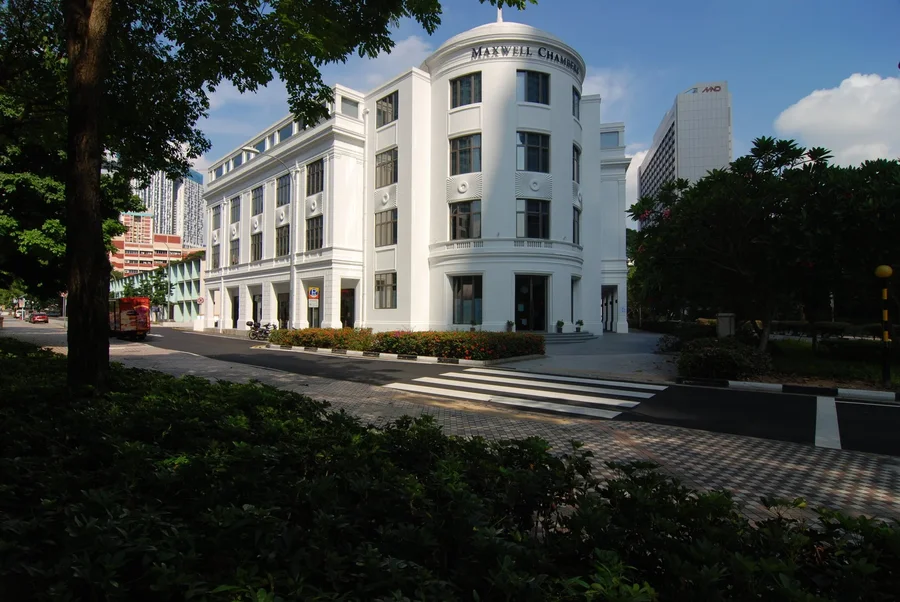
Maxwell Chambers in Singapore, home to the Singapore Chamber of Maritime Arbitration (SCMA) and other dispute resolution institutions.

In international trade and maritime contracts, disputes are inevitable. Whether it’s a charter-party conflict, a cargo claim, or a marine insurance dispute, resolving these matters quickly and efficiently is crucial to keeping global commerce moving.

Arbitration has become the preferred mechanism for resolving such disputes due to its neutrality, confidentiality, cost-effectiveness, and enforceability under international treaties 

The choice of arbitration venue often depends on jurisdictional preference, governing law, and enforceability under international arbitration conventions.

This article aims to provide an overview of Arbitration Centres specializing in maritime and trade-related disputes, their jurisdictional advantages, and their role in shaping the global arbitration landscape.

1. Choosing the Right Arbitration Framework

Selecting an arbitration mechanism depends on several key factors, including the nature of the contract, the governing law, and the enforcement mechanisms available under international treaties. 

Arbitration provides a private and efficient mechanism to resolve disputes, avoiding lengthy litigation in national courts.

The right arbitration framework ensures efficiency, neutrality, and enforceability in resolving disputes.

Arbitration spans multiple industries, each with specialized institutions, procedural rules, and expert arbitrators. In our field, the most relevant branches include:

  • Trade Arbitration – Sales contracts, distribution agreements, and commodity trade disputes.
  • Maritime Arbitration – Shipping disputes, charterparties, and marine insurance claims.
  • Commercial Arbitration – Corporate disputes, joint ventures, and supply chain conflicts.
  • Aviation Arbitration – Airline liability, aircraft leasing, and aviation insurance claims.
  • Energy Arbitration – Covering oil & gas contracts, renewables, and power generation disputes.
  • Environmental Arbitration – Cross-border environmental liability and regulatory compliance disputes.

Each branch has specialized institutions, procedural rules, and expert arbitrators familiar with industry-specific legal frameworks.

2. Key Arbitration Centres

There are specialist Arbitration Centres set up for the specific purpose of Maritime Arbitration. The two prominent ones are the London Maritime Arbitration Association (LMAA) and the Singapore Chamber of Maritime Arbitration (SCMA). Both centres handle a substantial caseload of maritime arbitration cases.

2.1. London Maritime Arbitrators Association (LMAA) – United Kingdom

When it comes to maritime arbitration, London is the undisputed global hub, and the London Maritime Arbitrators Association (LMAA) is at the heart of it. Handling thousands of cases each year, LMAA is the go-to institution for resolving disputes in charterparties, ship sales, cargo claims, and marine insurance conflicts.

What makes LMAA stand out? One major factor is that most international shipping contracts are governed by English law, a legal framework that has shaped maritime commerce for centuries. 

Interesting fact: In some years, LMAA has handled more maritime arbitration cases than all other major arbitration centres combined

🔗 Related article: Arbitration Jurisdictions: Singapore and London in Charterparties


2.2. Singapore Chamber of Maritime Arbitration (SCMA) – Singapore

Why choose SCMA?

  • A fast-growing arbitration hub for maritime disputes in Asia.
  • Provides a neutral and flexible framework tailored to the shipping industry.
  • Supported by Singapore’s strong legal system and proximity to major global shipping routes.

While London (LMAA) remains the dominant force in maritime arbitration, Singapore (SCMA) has rapidly emerged as a serious competitor, especially for disputes involving Asia-Pacific trade. 

Unlike LMAA, which follows a more traditional structure, SCMA offers a more flexible, ad hoc arbitration model, allowing parties to tailor proceedings to their specific needs. 

This makes SCMA particularly attractive for businesses looking for cost-effective and efficient dispute resolution outside the rigid frameworks of institutional arbitration.

🔗 Related article: Arbitration Jurisdictions: Singapore and London in Charterparties


2.3. Hong Kong Maritime Arbitration Group (HKMAG) – Hong Kong

The Hong Kong Maritime Arbitration Group (HKMAG) operates under the framework of the Hong Kong International Arbitration Centre (HKIAC), positioning itself as a key institution for resolving maritime and commodity trade disputes in the Asia-Pacific region.

Unlike LMAA, which dominates in English law-governed shipping disputes, HKMAG offers an attractive alternative for businesses with strong trade links to China. Its procedures align with English legal principles while also benefiting from Hong Kong’s arbitration-friendly legal system, making it a preferred choice for companies involved in cross-border trade with mainland China.

4. Society of Maritime Arbitrators (SMA) – United States

In the United States, the Society of Maritime Arbitrators (SMA) in New York serves as a major arbitration forum, particularly for charter-party disputes, marine insurance claims, and maritime trade conflicts.

As one of the longest-established arbitration institutions in the industry, SMA provides a set of widely recognised arbitration rules frequently included in contracts by shipowners, charterers, and insurers. While SMA does not have the same volume of cases as LMAA, its strong ties to the New York maritime sector make it a crucial centre for those dealing with disputes involving the Americas.

5. China Maritime Arbitration Commission (CMAC) – China

For businesses operating in China-related maritime trade, the China Maritime Arbitration Commission (CMAC) offers a distinct advantage.

Functioning under the China International Economic and Trade Arbitration Commission (CIETAC), CMAC handles disputes arising from shipping, trade, and logistics, providing a direct and efficient mechanism for resolving conflicts involving Chinese companies.

Unlike Hong Kong’s HKMAG, which follows a common law approach, CMAC operates within China’s broader legal framework, making it the go-to choice for those seeking arbitration under Chinese jurisdiction.


6. Chambre Arbitrale Maritime de Paris (CAMP) – France

In Europe, the Chambre Arbitrale Maritime de Paris (CAMP) stands as France’s leading maritime arbitration institution.

Specialising in transport, commodities trade, and shipping contract disputes, CAMP is particularly well-regarded within Francophone jurisdictions.

While it may not have the same global reach as LMAA or ICC, it provides a strong regional alternative for companies operating in French-speaking markets, offering expertise in civil law-based dispute resolution.


7. International Chamber of Commerce (ICC) – France (Paris)

The International Chamber of Commerce (ICC), headquartered in Paris, remains one of the most prestigious arbitration institutions worldwide.

Unlike sector-specific maritime arbitration bodies such as LMAA or SCMA, ICC arbitration is widely used across various industries, including commodity trading and shipping.

ICC arbitration clauses are a standard feature in international contracts, offering structured procedures, a neutral venue, and strong enforcement mechanisms under the New York Convention, making it a preferred choice for companies seeking a globally recognised dispute resolution framework.


8. Dubai International Arbitration Centre (DIAC) – UAE

For parties engaged in trade and maritime business in the Middle East, the Dubai International Arbitration Centre (DIAC) serves as a key arbitration hub.

DIAC provides a structured arbitration system tailored to shipping, logistics, and international trade, offering an efficient alternative to London or Singapore for disputes arising in the Gulf region.

Unlike some Western arbitration bodies, DIAC is uniquely positioned to accommodate disputes involving regional legal and commercial practices, making it an increasingly attractive choice for businesses operating in the UAE and beyond.


9. Stockholm Chamber of Commerce (SCC) – Sweden

Finally, the Stockholm Chamber of Commerce (SCC) has built a reputation as a leading arbitration centre for European and Russian trade disputes.

While it may not be as maritime-focused as LMAA or SCMA, SCC is frequently chosen for commodity trading and international commercial agreements.

With its neutral and reliable arbitration procedures, SCC is a particularly strong option for companies seeking an independent venue for resolving cross-border trade disputes.

International Arbitration Process in Trade & Marine Insurance

Classical Ionic column representing stability and structure, symbolizing the International Arbitration Process in Shipping & Insurance.

The international arbitration process in trade & marine insurance remains a preferred alternative to litigation, offering a neutral and enforceable means of resolving disputes.

When disputes arise in international trade and shipping operations, arbitration often takes center stage.

But what makes arbitration the preferred choice for trade and marine insurance disputes?

Arbitration offers a specialized, efficient, and enforceable means of settling conflicts, particularly in cases involving complex contractual terms, cross-border regulations, and industry-specific challenges.

It is widely used in shipping disputes, charterparties, marine insurance claims, and trade contracts.

Parties can agree to arbitration clauses in their sales contracts, distribution agreements, and transport insurance policies, ensuring that conflicts are handled by an impartial tribunal.

When is arbitration recommended? It becomes essential when direct negotiations fail, necessitating a structured dispute resolution mechanism that balances legal certainty with commercial flexibility.

For example, in a case of recovery after subrogation, arbitration ensures that insurers or P&I clubs can efficiently claim reimbursement from liable third parties, minimizing prolonged litigation and jurisdictional uncertainties.

In this article, we provide a comprehensive overview of the arbitration process, and its application across different industries, including shipping and commodity trade.

1. Key Principles of Arbitration

1.1. Arbitration is consensual

Arbitration can only take place if both parties mutually agree to it, distinguishing it from litigation, which can be imposed by law. In commercial contracts, parties often include an arbitration clause specifying that any future disputes will be resolved through arbitration.

Alternatively, if a dispute has already arisen, the parties may enter into a submission agreement, referring the matter to arbitration.
Unlike mediation, where a party can withdraw at any stage, arbitration is binding once agreed upon.

1.2. Party autonomy

One of the core tenets of arbitration is party autonomy, which grants disputing parties the flexibility to tailor the arbitration process to their needs.

This includes selecting arbitrators with relevant expertise, defining procedural rules, choosing the governing law, and determining the scope of disputes covered under the arbitration clause.

1.3. Neutrality and expertise

Unlike court litigation, where judges may not have specialized industry knowledge, arbitration panels consist of experts in maritime law, shipping, and insurance.

Neutrality is another key factor, as arbitrators operate independently of the parties and jurisdictional biases, making arbitration particularly suitable for international disputes.

1.4. Finality and limited appeals

Arbitration provides a final and binding resolution, reducing prolonged disputes that may arise in traditional litigation.

Unlike court decisions, which can be subject to multiple levels of appeal, arbitral awards have limited grounds for challenge, typically restricted to procedural irregularities or violations of due process. Courts generally uphold arbitration decisions under international conventions such as the New York Convention (1958), ensuring their enforceability across multiple jurisdictions.

1.5. Confidentiality

A significant advantage of arbitration over litigation is its confidential nature. Arbitration proceedings remain private, protecting sensitive commercial information, contractual terms, and proprietary business strategies from public exposure. This is particularly relevant in marine insurance disputes, shipping contracts, and high-value commodity trade, where confidentiality helps maintain business reputations and prevents unnecessary market disruptions.

2. The Arbitration Process: Key Stages

2.1. Arbitration agreement & clause

The arbitration process typically starts with a well-drafted arbitration clause in a charterparty, sales contract, marine insurance policy, or commodity trade agreement. 

A standard arbitration clause should specify:

  • Governing law (e.g., English Law, Singapore Law, UAE Law)
  • Arbitration institution (LMAA, ICC, SIAC, DIFC, etc.)
  • Seat of arbitration (e.g., London, Singapore, Dubai)
  • Number of arbitrators and their appointment process
  • Language of arbitration

Some agreements may require preliminary steps, such as senior management discussions or mediation, before arbitration can commence.

2.2. Notice of arbitration

If institutional rules apply, they typically dictate the required content of the notice to arbitrate, which generally includes a summary of the dispute and, if applicable, the nomination of an arbitrator.

Key elements in a Notice of Arbitration:

  • Identification of parties
  • Arbitration agreement reference
  • Description of the dispute
  • Relief sought
  • Proposed arbitrator (if applicable)

Arbitration begins when the claimant serves a formal notice of arbitration to the respondent.

The respondent then has a set period to reply, after which arbitrators are appointed based on the agreed terms.

2.2. Appointment of arbitrators

Arbitrators are appointed according to the terms of the contract. For example, parties may specify an arbitral institution, such as the ICC in Paris or a Chamber of Commerce, to oversee the process.

Once arbitrators are appointed, the tribunal must be formally constituted.

Common selection methods include:

  • Single arbitrator: If parties agree on one neutral arbitrator.
  • Three-arbitrator panel: Each party appoints one arbitrator, and both select a third neutral chair.
  • Institutional appointment: When parties fail to agree, the institution (e.g., ICC, LMAA) appoints arbitrators.

If a three-member tribunal is required, each party typically selects one arbitrator, and the two nominees or the arbitral institution appoint a chairperson. In cases with multiple parties or a sole arbitrator, the applicable arbitration rules will determine the selection process.

Additionally, parties are usually required to make an advance on costs, which covers administrative expenses, arbitrators’ fees, and any procedural costs. The institution or tribunal assesses the amount, and failure to pay may result in the arbitration being suspended or terminated. Proper financial planning is essential to ensure the smooth progression of the proceedings.

2.3. Preliminary meetings

The arbitrators and parties meet to agree on timelines, procedures, interim measures, and even the language of arbitration.
Although the arbitration language is often outlined in the agreement, this meeting allows the parties to confirm or adjust these details, ensuring the process is tailored to the specifics of the case.

2.4. Submissions and evidence

Each side presents their evidence, documents, and arguments.

For trade and transport disputes, this could include:

  • charterparty agreements, or other contractual documents.
  • Shipping logs
  • Bills of lading
  • Marine surveyor reports
  • Insurance policies and claim records
  • Correspondence and expert testimonies

This step is similar to discovery in litigation but typically less formal and faster.

2.5. Hearings

Arguments are presented, and witnesses or experts may be examined. Unlike court trials, arbitration hearings are private and structured to address the dispute’s specifics.

2.6. Final award

The arbitrators issue their decision, known as the “award.” Arbitration awards are typically confidential, unlike judicial sentences, which are public.

2.7. Challenging or appealing an award

Arbitral awards are generally final, but they may be challenged under limited circumstances, such as procedural errors, jurisdictional issues, or violations of due process. The availability of an appeal depends on the arbitration agreement, the chosen arbitral seat, and the governing institutional rules.

2.8. Enforcement of arbitration awards

One of arbitration’s key advantages is the enforceability of awards under the New York Convention (1958), which allows recognition and enforcement in over 160 countries. Enforcement depends on the jurisdiction where the award is sought and factors such as the financial status of the losing party or the availability of assets for execution.

Ensuring enforceability should be a key consideration before initiating arbitration, particularly in international disputes.

3. Common Disputes in Shipping & Insurance Arbitration

International arbitration in shipping and insurance is commonly used for resolving disputes involving:

  • Shipping Disputes & Freight Insurance – Charterparty disagreements, freight insurance claims, cargo recovery, and liability disputes.
  • Marine Insurance Disputes & Claims Subrogation – Claims subrogation, hull and cargo claims, cargo policies clauses, and P&I claims.
  • Sales Contracts, Distribution Agreements & Commodity Trade – Disputes involving distribution agreements, commodity trade, and contract breaches.
  • Corporate, Joint Ventures & Supply Chain Disputes – Joint ventures, supply chain conflicts, and contractual obligations.
  • Environmental & Regulatory Compliance Disputes – Cross-border environmental liability, oil & gas contracts, and renewables-related claims.
  • Aviation Insurance & Liability – Airline liability disputes and aviation insurance claims.

4. Key Legal Frameworks Governing International Arbitration

Several legal frameworks provide a robust foundation for arbitration in the maritime and insurance sectors:

InstitutionKey FeaturesCommon Use Cases
New York Convention (1958)Ensures global enforcement of arbitration awards.Enforcing cross-border arbitration decisions.
UNCITRAL Model LawHarmonized arbitration laws worldwide.Governing procedural aspects of arbitration.
London Maritime Arbitrators Association (LMAA)Specializes in maritime arbitration.Charterparty and shipping disputes.
International Chamber of Commerce (ICC)Commercial arbitration in global trade.Insurance and contract-related disputes.
Singapore International Arbitration Centre (SIAC)Preferred for Asia-Pacific disputes.Shipping, energy, and trade conflicts.
Dubai International Financial Centre (DIFC)Arbitration hub for the Middle East.Maritime, trade, and logistics disputes.

5. Arbitration Recap: Key Questions Answered

What is arbitration in international trade and marine insurance?
Arbitration is a private dispute resolution process where an impartial tribunal resolves conflicts arising from trade, transport, and marine insurance contracts. It is preferred over litigation due to its speed, confidentiality, and enforceability.

Unlike litigation, arbitration is a consensual process where parties agree on arbitrators, procedural rules, and governing law. It is generally faster, confidential, and enforceable across borders under the New York Convention.

The arbitration process involves: (1) Notice of arbitration, (2) Appointment of arbitrators, (3) Preliminary meetings, (4) Submission of evidence, (5) Hearings, (6) Final award issuance, and (7) Enforcement of the award.

Yes, arbitration awards are enforceable in over 160 countries under the New York Convention (1958), making it a preferred method for cross-border dispute resolution.

Conclusion

Arbitration isn’t one-size-fits-all. The process can vary depending on the seat of arbitration. That’s why it’s crucial to draft arbitration clauses carefully to avoid surprises.

If you require legal representation in arbitration for hull claims, cargo disputes, or trade contract conflicts, our team at Marlin Blue specializes in arbitration. 

Contact us today to learn more about how we can assist you.